We have not used this blog in a long time, there is however still great information here, we would like to invite you to visit our new and improved website.
www.triadmarine.com
You can get great information, shop, and contact us from there.
Monday, July 24, 2017


Wednesday, March 19, 2014
Ocean Signal RescueMe PLB1
I would like to introduce you to the Ocean Signal RescueMe PLB1, the world's smallest PLB (personal locator beacon). This unit has a 7 year battery storage life, a 7 year warranty and a host of features that are all condensed into a small, light weight portable device.


Give yourself peace of mind knowing you have a life saving device. The Ocean Signal RescueMe PLB1 can be purchased for under $300.00.

Introducing the world’s smallest PLB
- 30% smaller (typ) by volume
- Easily fits in lifejacket
- Retractable Antenna
- 7 Year Battery Life
- 7 year warranty
- High brightness strobe light >1candela
- 66 channel GPS receiver
- Unique mounting clip and flotation pouch
Give yourself peace of mind knowing you have a life saving device. The Ocean Signal RescueMe PLB1 can be purchased for under $300.00.
Wednesday, October 2, 2013
How Important is Safety Gear?
How important is safety gear, ask the 12 people rescued just 14 miles out of Freeport Texas on October 1,2013. They had a radio and were able to call the coast guard, they had life jackets and were able to stay afloat, but was there more that could have been a factor? The answer is yes, these situations are all different.
Being prepared is the best thing any boater can do. Educate yourself, educate your crew, and have more than one safety item available to use. The short list is VHF Radio, Life Jacket (PFD) for each crew member, Life Raft, EPIRB or PLB (both is even better) and a ditch bag full of safety essentials.
A VHF and life jackets did the job in this instance, but consider that the water could have been cold and the VHF may not have worked. Then what? You need a life raft to get you out of the cold water and an EPIRB or PLB to bring the rescue authorities to you.
You can see information on hypothermia in this post
We strive to provide the best information about safety and help boaters with all of their safety gear needs. We do community outreach and we now offer a leisure boating Offshore Safety Class for local boaters.
Being prepared is the best thing any boater can do. Educate yourself, educate your crew, and have more than one safety item available to use. The short list is VHF Radio, Life Jacket (PFD) for each crew member, Life Raft, EPIRB or PLB (both is even better) and a ditch bag full of safety essentials.
A VHF and life jackets did the job in this instance, but consider that the water could have been cold and the VHF may not have worked. Then what? You need a life raft to get you out of the cold water and an EPIRB or PLB to bring the rescue authorities to you.
You can see information on hypothermia in this post
We strive to provide the best information about safety and help boaters with all of their safety gear needs. We do community outreach and we now offer a leisure boating Offshore Safety Class for local boaters.
Friday, February 22, 2013
What if Your Rescue Hinged on an EPIRB
From the Coast Guard News, a story about an EPIRB. Every rescue mission is different, in the event you need to be rescued having the right equipment is truly the difference between rescue and recovery.
The Coast Guard, World Rescue Authorities and groups like AMVER can only do so much, you have to do your part and provide yourself with the best life saving tools available.
Click Here to Visit Triad Marine's Web Store
Click Here to Follow us on Twitter
Click Here to Like us On Facebook
Click Here to Shop for an EPIRB
Click Here to Register an EPIRB You Own
Click Here to Read More About AMVER
After reading this story, I would like to remind you to check the date on your EPIRB battery, make sure your EPIRB is registered and consider replacing older EPIRB technology with a GPS enabled EPIRB.There was no moon, and multiple cloud layers and thunderstorm cells blocked any available light provided by the stars,” said Lt. j.g. Caleb Thorp, the Hercules pilot. “The rain was near continuous, which reflected any light emitted from the aircraft and caused our night vision goggles to be useless. So we secured as many lights on the aircraft as possible to aid the search outside. We could only see straight down where we saw very rough seas.”Finally, through the waves and winds, the C-130 crew received a blip on their radar that matched the profile of a sailboat.Unable to actually see the vessel, and failing to establish communications over the radio, the Hercules crew began to fly over the boat’s location, flashing the plane’s wing tip landing lights to grab the crew’s attention.
The sailing vessel Wolfhound is seen here approximately 80-miles north of Bermuda in the FLIR camera of a Coast Guard HC-130 Hercules from Air Station Elizabeth City, N.C., Feb. 9, 2013. U.S. Coast Guard photo by Petty Officer 3rd class Sarah Bachman and Petty Officer 3rd Class Jerimiah Strombeck“We couldn’t see anything on the first pass, but on the second pass we saw a light cutting through the blowing rain,” said Thorp. “We flashed our lights and the sailing vessel flashed a handheld light back at the aircraft.”The sailing vessel, later identified as the 48-foot long Wolfhound, lost all power and was at the mercy of the Atlantic Ocean. With the power out, its radio was useless, and the four Irish nationals aboard had no other means of contacting a rescue agency.Within six hours, both of the AMVER merchant vessels arrived on scene, led there by the Hercules crew. The crew of the 738-foot Tetian Trader eventually came alongside the Wolfhound and helped the crew leave their stricken ship.On average, there is a commercial ship in the AMVER system that is involved in saving a life somewhere in the world every 33 hours.The rescue of the crew aboard the Wolfhound demonstrates how the culmination of EPIRB technology and the partnerships between multiple agencies save lives. The only other thing that might have better facilitated this successful search and rescue effort would have been if the sailboat’s EPRIB had been registered and up to date. With an unregistered EPRIB, a distress alert may be delayed before reaching the Coast Guard, often in situations in which there is not a moment to spare.

The Coast Guard, World Rescue Authorities and groups like AMVER can only do so much, you have to do your part and provide yourself with the best life saving tools available.
Click Here to Visit Triad Marine's Web Store
Click Here to Follow us on Twitter
Click Here to Like us On Facebook
Click Here to Shop for an EPIRB
Click Here to Register an EPIRB You Own
Click Here to Read More About AMVER
Monday, January 28, 2013
Highfield Aluminum
The Highfield Aluminum Hull Inflatable Boat featured here is 10'2" and weighs 115 lbs. This boat is light weight and rugged. Come see us for more information.

Thursday, January 17, 2013
Life Raft Service
We are a USCG approved life raft service center. We service commercial and leisure life rafts. Give us a call if your raft is out of date. You want to be prepared, especially in these colder temperatures.

Thursday, April 5, 2012


Above you see pictures of a Zodiac FC420 Military Professional Inflatable boat. This boat is 13'9" when inflated. Below you will see how versatile and easy to transport these boats can be, we packed 2 of them into a Honda Odyssey Mini Van using the storage space and area where the third row would be. We are not transporting motors for these 2 boats so we are able to use the van.
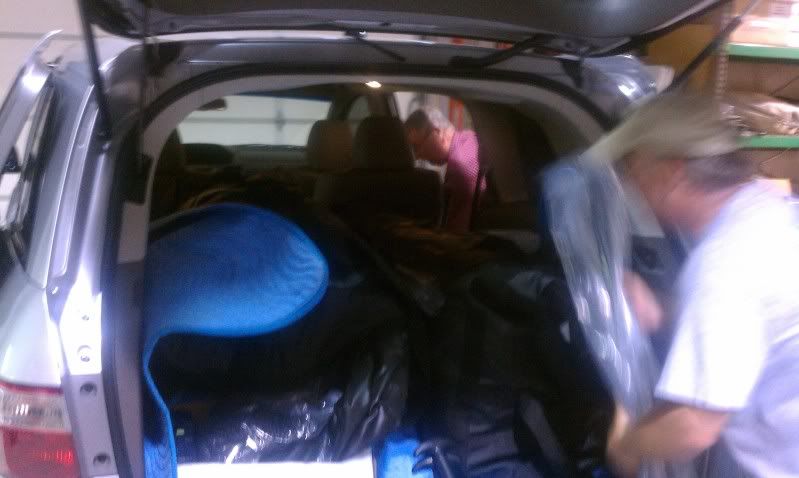
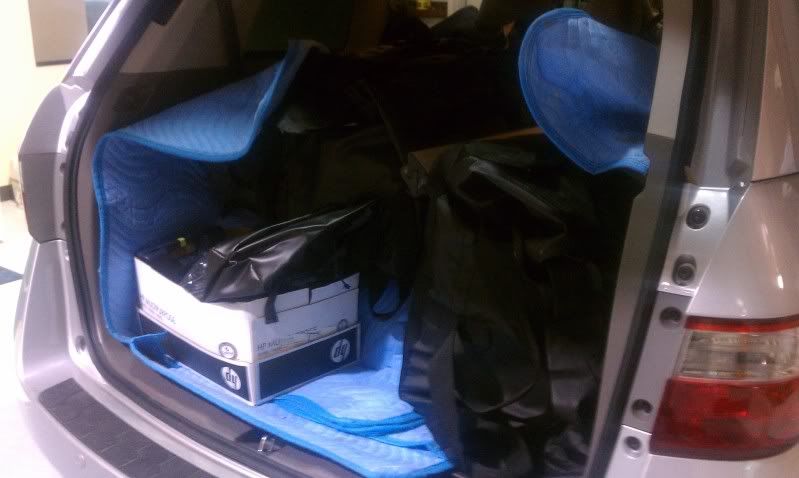
There you have it, Inflatable boats even the big awesome military kind can go where no fiberglass boat has gone before.
Those same boats can be used for many applications below are some pretty cool examples!

.jpg)
If you want to know more about inflatable boats please contact us!
Monday, September 26, 2011
PLB Talk
Again I will just talk some PLB talk. It is to important not to talk about them. PLBs (Personal Locator Beacons) are such a great item for hunting, fishing, sailing, kayaking, and pretty much any other outdoor activity you can think of doing.
Having a PLB could very well save your life. Today's PLBs are small, light weight, and very inexpensive compared to PLBs of the past. Check your facts about the PLB you are looking to purchase and remember the difference between a PLB and a personal signaling or tracking device will be the 406 MHz Signal. A true PLB that is intended to be a life saving device is FCC approved to operate on the 406MHz signal, requires a minimum operating life of 24 hours and is registered with NOAA.
The 406MHz signal is internationally recognized for land and sea, monitored by a world wide coalition of rescue authorities and transmits to the COSPAS/SARSAT satellites.
The battery transmits for 24 hours as laid out by the rescue authorities and the FCC before approval can be granted to be a PLB.
Registering with NOAA allows for the best information to start a search and contact your emergency contacts as well as knowing who the authorities are looking for. If you are a boater they even ask for a boat description. I hope you have found the following information helpful. You may visit Triad Marine's Web Store for great PLBs and pricing information.
Wednesday, June 8, 2011
Cold Water Dangers
Even though it is summer and the water is warm in Texas doesn't make it so everywhere. I just read a story from the Coast Guard News about a young man who fell out of his Kayak in Lake superior and has died. Apparently the water temperature is only 49 degrees there still and that is definitely cold enough to get hypothermia.
A couple of things that stood out about the story he had on a blue life vest.. as they stated this makes visibility harder because you blend in.
He had a wetsuit but it was half way on... He did not put it on before starting out on the trip, it is almost impossible to grip anything once your fingers get cold. There is no way to finish getting the wet suit on.
No strobe light and the article doesn't mention if he had a whistle but you need one on your vest.
Whether it is cold water or warm you need a brightly colored PFD. Outfit the PFD with a strobe light and a whistle. For added safety get a small and portable PLB (personal locator beacon).
If it is a cold water situation dress appropriately from the beginning.
Make sure you don't go alone, unfortunately his friends lost site of him.
File a float plan, just tell someone where you are going and when you plan to return.
Be safe and have fun.
A great strobe light for your PFD is the ACR Auto-Hemilight 2


Of course if you need any help with safety gear we are here to assist you.
A couple of things that stood out about the story he had on a blue life vest.. as they stated this makes visibility harder because you blend in.
He had a wetsuit but it was half way on... He did not put it on before starting out on the trip, it is almost impossible to grip anything once your fingers get cold. There is no way to finish getting the wet suit on.
No strobe light and the article doesn't mention if he had a whistle but you need one on your vest.
Whether it is cold water or warm you need a brightly colored PFD. Outfit the PFD with a strobe light and a whistle. For added safety get a small and portable PLB (personal locator beacon).
If it is a cold water situation dress appropriately from the beginning.
Make sure you don't go alone, unfortunately his friends lost site of him.
File a float plan, just tell someone where you are going and when you plan to return.
Be safe and have fun.
A great strobe light for your PFD is the ACR Auto-Hemilight 2
Of course if you need any help with safety gear we are here to assist you.
Friday, June 3, 2011
Swim Safe
Today I will touch on swimming safe because marine safety covers all water activities.
The top 3 rules for swimming safe
Never Swim Alone
Never Swim while intoxicated
Never Swim in unknown remote waters
Swimming alone means you don't have anyone looking out for you. Should you become tired or swallow water the wrong way and the process of drowning begins no one would know.
When you are intoxicated you are impaired and your body reacts differently. Your ability to make good judgements is clouded. Drinking and swimming do not mix for those very reasons.
Swimming somewhere unknown can be an issue because you never know what is under the water. There could be drainage pipes that cause currents or even ones big enough to get sucked into. There could also be dangerous debris, which could injure you causing you to drown.
I touched on swimming safety before and you can read it hear.
Make sure you have flotation devices in case they are needed, provide life jackets for children, and watch out for each other.
We have already had some drowning accidents in our area and I hope there are no more this summer.
The top 3 rules for swimming safe
Never Swim Alone
Never Swim while intoxicated
Never Swim in unknown remote waters
Swimming alone means you don't have anyone looking out for you. Should you become tired or swallow water the wrong way and the process of drowning begins no one would know.
When you are intoxicated you are impaired and your body reacts differently. Your ability to make good judgements is clouded. Drinking and swimming do not mix for those very reasons.
Swimming somewhere unknown can be an issue because you never know what is under the water. There could be drainage pipes that cause currents or even ones big enough to get sucked into. There could also be dangerous debris, which could injure you causing you to drown.
I touched on swimming safety before and you can read it hear.
Make sure you have flotation devices in case they are needed, provide life jackets for children, and watch out for each other.
We have already had some drowning accidents in our area and I hope there are no more this summer.
Friday, May 27, 2011
National Safe Boating Week Post #4
This week we have been focusing on safe boating for National Safe Boating Week if you missed the first 3 post you can read them
Kick Off Post about PFDs (life vests)
Post #2 About EPIRBs and PLBs
Post #3 about Ditch Bags
Today in Post #4 I am going to write about life rafts which are crucial pieces of life saving gear. Also they are the number one defense against becoming shark food if your boat goes down. All right so that is probably not the nicest thing to say but the point is anything can happen!
If your boat sinks or capsizes how will you get out of the water. Did you know, that in addition to being at risk of injury from floating debris or drowning you are at risk of hypothermia even in warm water.
I know people believe that they have unsinkable boats, so did the owners of the Titanic..Remember how that went down (pun intended). Even if a boat is unsinkable it can still capsize. Attempting to hold on the hull of your capsized boat is hard enough but what if the seas are rough or you are injured then it is nearly impossible.
You need a life raft, as with any piece of equipment it does not guarantee you will survive but it improves your chances greatly. Getting out of the water can be crucial to your survival.
A life raft is not a set it and forget it item either you need to service the raft as the manufacture instructs. The equipment in the life raft is dated and the CO2 cylinder needs to be checked, as that is what makes it so vital the fast inflation in an emergency.
Life rafts come in several options for person capacity, equipment pack and service intervals so don't be afraid to contact a professional like Triad Marine (us) or another life raft sales and service center. A place that services them as well as sells them will ultimately be more knowledgeable about the contents of the raft and how they work. We even offer people Demonstrations and will go through your raft with you the first time you get it serviced.
Be safe when boating buy the gear you need for the voyages you make. Ask for help in making the choices if you are unsure. Make choices with the worst in mind and the the best is even better.
Remember even the smallest craft like a canoe or kayak needs safety gear, so as the boat grows the list of safety gear should grow with it.
Kick Off Post about PFDs (life vests)
Post #2 About EPIRBs and PLBs
Post #3 about Ditch Bags
Today in Post #4 I am going to write about life rafts which are crucial pieces of life saving gear. Also they are the number one defense against becoming shark food if your boat goes down. All right so that is probably not the nicest thing to say but the point is anything can happen!
If your boat sinks or capsizes how will you get out of the water. Did you know, that in addition to being at risk of injury from floating debris or drowning you are at risk of hypothermia even in warm water.
I know people believe that they have unsinkable boats, so did the owners of the Titanic..Remember how that went down (pun intended). Even if a boat is unsinkable it can still capsize. Attempting to hold on the hull of your capsized boat is hard enough but what if the seas are rough or you are injured then it is nearly impossible.
You need a life raft, as with any piece of equipment it does not guarantee you will survive but it improves your chances greatly. Getting out of the water can be crucial to your survival.
A life raft is not a set it and forget it item either you need to service the raft as the manufacture instructs. The equipment in the life raft is dated and the CO2 cylinder needs to be checked, as that is what makes it so vital the fast inflation in an emergency.
Life rafts come in several options for person capacity, equipment pack and service intervals so don't be afraid to contact a professional like Triad Marine (us) or another life raft sales and service center. A place that services them as well as sells them will ultimately be more knowledgeable about the contents of the raft and how they work. We even offer people Demonstrations and will go through your raft with you the first time you get it serviced.
Be safe when boating buy the gear you need for the voyages you make. Ask for help in making the choices if you are unsure. Make choices with the worst in mind and the the best is even better.
Remember even the smallest craft like a canoe or kayak needs safety gear, so as the boat grows the list of safety gear should grow with it.
Wednesday, May 25, 2011
National Safe Boating Week Post 3
Ditch Bags...
Every boat big and small needs some kind of safety gear and there are ditch bags for all purposes, they come in different sizes and shapes.
Consider if you have a small vessel or even a canoe or kayak you need to have identification and at the very least a signal mirror but a PLB is optimal for small vessels.
You may consider a document pouch style bag that will hold those items.
If you have a larger vessel we suggest building the best bag for your boating needs, consider the number of persons on the boat, the distance you will travel from shore, the length of the trip and other equipment already on board the vessel.
Some basic items to consider are as follows
Flares (USCG)
Signal Mirror (we always suggest Coast Guard Approved equipment)
Fishing Kit
Sea Sick Pills
Floating Flash Light
Strobe Light
Batteries and Spares
Water (the packets we put in the life raft store easily)
Food (We suggest the same kind we put into the life rafts)
First Aid (as much as your skills allow for proper use)
PLB or EPIRB
VHF Radio
Identification and other documents (at least copies)
Sea Sick Bags
Dye Marker or Rescue Streamer
Sunscreen
Bug Repellent
Any Prescription Medication taken by members of the crew
Isothermal Blankets
Just remember when packing a ditch bag that it will be your resources should your boat sink or capsize. You need one and you need to make sure it is packed properly for each trip.
It never hurts to double check the dates and contents 2-3 times per year. Don't let it become a set it and forget it boating item.
For more information on packing a great Ditch Bag contact Triad Marine.


Perfect for small Boats
Every boat big and small needs some kind of safety gear and there are ditch bags for all purposes, they come in different sizes and shapes.
Consider if you have a small vessel or even a canoe or kayak you need to have identification and at the very least a signal mirror but a PLB is optimal for small vessels.
You may consider a document pouch style bag that will hold those items.
If you have a larger vessel we suggest building the best bag for your boating needs, consider the number of persons on the boat, the distance you will travel from shore, the length of the trip and other equipment already on board the vessel.
Some basic items to consider are as follows
Flares (USCG)
Signal Mirror (we always suggest Coast Guard Approved equipment)
Fishing Kit
Sea Sick Pills
Floating Flash Light
Strobe Light
Batteries and Spares
Water (the packets we put in the life raft store easily)
Food (We suggest the same kind we put into the life rafts)
First Aid (as much as your skills allow for proper use)
PLB or EPIRB
VHF Radio
Identification and other documents (at least copies)
Sea Sick Bags
Dye Marker or Rescue Streamer
Sunscreen
Bug Repellent
Any Prescription Medication taken by members of the crew
Isothermal Blankets
Just remember when packing a ditch bag that it will be your resources should your boat sink or capsize. You need one and you need to make sure it is packed properly for each trip.
It never hurts to double check the dates and contents 2-3 times per year. Don't let it become a set it and forget it boating item.
For more information on packing a great Ditch Bag contact Triad Marine.


Perfect for small Boats
Monday, May 23, 2011
National Safe Boating Week Post #2
Today for National Safe Boating Week we are going to talk about EPIRBs and PLBs. An EPIRB stands for Emergency Position-Indicating Radio Beacon and PLB stands for Personal Locator Beacon. Both EPIRBs and PLBs operate on the 406 MHz signal using the same COSPAS-SARSAT Satellite system, which is directly monitored by Search and Rescue Personnel.
Different boaters will have a different need when it comes to choosing an EPIRB or PLB, although both units operate the same way there are key differences in each unit. EPIRBs have a longer battery life and they are designed to float upright in the water when tethered to a person or life raft. You can get and EPIRB in an automatic and manual activation model. PLBs will have a lower battery operating time and will all be manual activation. The good thing about a PLB is the size and potability you can take with you for all of your land based adventures as well.
When choosing the right EPIRB or PLB remember to stay away from gadget devices, remember only a device that operates on the 406MHz signal is an EPIRB or PLB. These will be the only units using the COSPAS-SARSAT system and monitored by rescue authorities. While gadgets have a place and a purpose but should not be your only signaling source for emergencies.
Coast Guard Rescues 3 They had a PLB
Here are Other posts about PLBs
PLBs are not Gadgets
If you missed the Kick off to National Safe Boating Week find it Here
There is no doubt that EPIRBs and PLBs save lives, they also cut down on search and rescue time as well as the expense.
If you are injured or in the water you want the Rescue Authorities there as soon as possible.
Here is a good note from the Coast Guard about upgrading to an EPIRB or PLB with a GPS signal built into the unit.


Different boaters will have a different need when it comes to choosing an EPIRB or PLB, although both units operate the same way there are key differences in each unit. EPIRBs have a longer battery life and they are designed to float upright in the water when tethered to a person or life raft. You can get and EPIRB in an automatic and manual activation model. PLBs will have a lower battery operating time and will all be manual activation. The good thing about a PLB is the size and potability you can take with you for all of your land based adventures as well.
When choosing the right EPIRB or PLB remember to stay away from gadget devices, remember only a device that operates on the 406MHz signal is an EPIRB or PLB. These will be the only units using the COSPAS-SARSAT system and monitored by rescue authorities. While gadgets have a place and a purpose but should not be your only signaling source for emergencies.
Coast Guard Rescues 3 They had a PLB
Here are Other posts about PLBs
PLBs are not Gadgets
If you missed the Kick off to National Safe Boating Week find it Here
There is no doubt that EPIRBs and PLBs save lives, they also cut down on search and rescue time as well as the expense.
If you are injured or in the water you want the Rescue Authorities there as soon as possible.
Here is a good note from the Coast Guard about upgrading to an EPIRB or PLB with a GPS signal built into the unit.

Friday, May 20, 2011
National Safe Boating Week Kick Off
Lets kick off National Safe Boating Week in style ... Today was wear your Life Jacket to work day ...
Also Saturday is Ready Set Inflate Day

I did not wear mine to work but I can see some inflatable PFDs from my desk that are for sale if you need to stop by Triad Marine and get one to wear to work. Did you know the most important place to wear a life jacket is in the boat! If you are not wearing it then it simply can't save you from drowning. Make sure to check the life jacket laws in your state.
You can find the Texas Laws here
"70% of all boating Deaths are from Drowning, and 90% of those who drowned were not wearing a life jacket." This fact comes to you from the U.S Coast Guard Facebook Fan Page
There are many types of Life Jackets which are sometimes called PFDs (Personal Flotation Devices), choosing the right one for you and your activities in accordance with the laws is really important. Never feel you have to go this alone, reach out to your local marine retailers. If you can't find it locally take to the web, even though we are in Texas we answer questions from all over the country. Why? Because Triad Marine and our employees care about people being informed.
I am a big fan of the inflatable PFDs just because they are so comfortable.


Also Saturday is Ready Set Inflate Day
I did not wear mine to work but I can see some inflatable PFDs from my desk that are for sale if you need to stop by Triad Marine and get one to wear to work. Did you know the most important place to wear a life jacket is in the boat! If you are not wearing it then it simply can't save you from drowning. Make sure to check the life jacket laws in your state.
You can find the Texas Laws here
"70% of all boating Deaths are from Drowning, and 90% of those who drowned were not wearing a life jacket." This fact comes to you from the U.S Coast Guard Facebook Fan Page
There are many types of Life Jackets which are sometimes called PFDs (Personal Flotation Devices), choosing the right one for you and your activities in accordance with the laws is really important. Never feel you have to go this alone, reach out to your local marine retailers. If you can't find it locally take to the web, even though we are in Texas we answer questions from all over the country. Why? Because Triad Marine and our employees care about people being informed.
I am a big fan of the inflatable PFDs just because they are so comfortable.

Yes that is me showing off a stylish, comfortable, Pink Mustang Survival Inflatable PFD

Feel Free to Snag this picture and use it for all of your Social Media Profile Pictures we did!
Be Safe Wear Your Life Jacket
Make sure everyone on your boat wears one too
Make sure it fits properly
Make sure it is in working condition
Enjoy the time on your boat!
Wednesday, May 11, 2011
Sold Boats for the Week
Today we delivered 2 boats from 2 different manufactures for 2 totally different purposes. Inflatable boats just have that sort of versatility.
This is an Achilles SG156 Inflatable Boat that will be used by a Fire Department in Magnolia Texas.


This is an Achilles SG156 Inflatable Boat that will be used by a Fire Department in Magnolia Texas.


This boat typically comes open and is used with a tiller handle motor, but at Triad Marine we can customize your inflatable boat to meet your needs. We added a jockey style console seat with remote steering for the motor. We hope this boat has many good years on the water working because that is what it is for.
The next boat to leave the store sold is a Zodiac Pro Open 650
This boat will be used as a coaching boat for kids that sail, not by the sailing organization but by their parents. The mom plans to use it to capture good pictures of the kids doing their thing.
The boat is 21'4" and is powered by a Yamaha F150 Outboard Motor. This boat will be fast, stable, and fuel efficient. It will not require a large tow vehicle and can also be used for some family fun.
The removable tube set on this boat makes it a real winner as it can be replaced if needed and it can be removed for repair if a customer lives far away from here. They would be able to ship just the tube set using UPS or Fed Ex rather than bringing the whole boat.
Meet "Jibby" as it will be called


Happy Boating "Jibby"
Wednesday, April 20, 2011
Spring Boating ... Be Safe In the Water Too
Spring is here and well every where else in the country too, though I am sure those of you having snow still have not started boating..
If you have a boat then you should have your safety needs in mind.. Did you follow our Spring Safety Check List Posts , if not you can click the link and read them.
Triad Marine reminds you to be safe while boating this Spring and Summer as well as anytime of the year, but today I want to talk about safety when playing in and around the water.
Remember the ocean and rivers have currents even if they look slow moving or still, water can always be in motion.
Never swim alone.. it is just bad practice anything can happen. Take flotation devices with you and your swim partner, the best ones are worn and the worst one is the one you left at home. Keep watch over your swim buddy at all times. If you are in a moving body of water wear the life vest... Weak swimmers should wear one at all times and strong swimmers should consider it.
Keep in mind the temperature of the water can affect your ability to swim...
Watch for the weather to change, when the wind picks up so do currents and that is when people get swept away.
Drowning can happen with no warning signs, most victims of drowning never make a sound or thrash like you see on TV or would imagine.
From This Article by Mario Vittone you can read about most drowning cases and how they really look
Be safe my friends and at Triad Marine we believe marine safety encompasses a lot more that just boating.

If you have a boat then you should have your safety needs in mind.. Did you follow our Spring Safety Check List Posts , if not you can click the link and read them.
Triad Marine reminds you to be safe while boating this Spring and Summer as well as anytime of the year, but today I want to talk about safety when playing in and around the water.
Remember the ocean and rivers have currents even if they look slow moving or still, water can always be in motion.
Never swim alone.. it is just bad practice anything can happen. Take flotation devices with you and your swim partner, the best ones are worn and the worst one is the one you left at home. Keep watch over your swim buddy at all times. If you are in a moving body of water wear the life vest... Weak swimmers should wear one at all times and strong swimmers should consider it.
Keep in mind the temperature of the water can affect your ability to swim...
Watch for the weather to change, when the wind picks up so do currents and that is when people get swept away.
Drowning can happen with no warning signs, most victims of drowning never make a sound or thrash like you see on TV or would imagine.
From This Article by Mario Vittone you can read about most drowning cases and how they really look
- Except in rare circumstances, drowning people are physiologically unable to call out for help. The respiratory system was designed for breathing. Speech is the secondary or overlaid function. Breathing must be fulfilled, before speech occurs.
- Drowning people’s mouths alternately sink below and reappear above the surface of the water. The mouths of drowning people are not above the surface of the water long enough for them to exhale, inhale, and call out for help. When the drowning people’s mouths are above the surface, they exhale and inhale quickly as their mouths start to sink below the surface of the water.
- Drowning people cannot wave for help. Nature instinctively forces them to extend their arms laterally and press down on the water’s surface. Pressing down on the surface of the water, permits drowning people to leverage their bodies so they can lift their mouths out of the water to breathe.
- Throughout the Instinctive Drowning Response, drowning people cannot voluntarily control their arm movements. Physiologically, drowning people who are struggling on the surface of the water cannot stop drowning and perform voluntary movements such as waving for help, moving toward a rescuer, or reaching out for a piece of rescue equipment.
- From beginning to end of the Instinctive Drowning Response people’s bodies remain upright in the water, with no evidence of a supporting kick. Unless rescued by a trained lifeguard, these drowning people can only struggle on the surface of the water from 20 to 60 seconds before submersion occurs.
Be safe my friends and at Triad Marine we believe marine safety encompasses a lot more that just boating.

A comfortable solution to Traditional PFDs is the belt pack..
Thursday, March 24, 2011
Spring Safety Checklist- Life Rafts
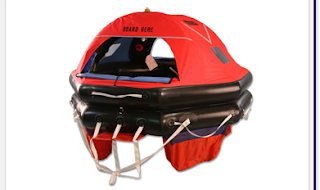
Starting the safety check list on life rafts ..Do you have a life raft? If not you should consider it a purchase for your Spring Boating needs. You can expect to pay between $1200.00 for a very simple single tubed life raft and up to $6000.00 or more for a top of the line offshore life raft. Always access your boating needs and trips to determine which new life raft will best suit them. Different life raft manufactures require different servicing intervals on each life raft so that may be a consideration during purchasing as well.
When purchasing a new life raft remember to consider the number of persons on your boat most of the time and try to match that number to the person capacity of the life raft.
Purchasing a life raft can be a tough decision so let someone help you.
Servicing a life raft is super important to the life of the life raft as well as the functionality. I have written other posts on servicing a life raft such as this one and this one and the point is always the same ...If you do not service the life raft you are taking a big risk that the life raft will not function properly. In one of the posts I highlighted the importance of servicing because the batteries in the flash light became corroded and battery acid leaked out all over the rest of the equipment. The raft had not been serviced one time in it's 10 year life... That particular raft should have been serviced 3 times.
I don't know about you but I would hate to be the first one in that life raft after struggling in a desperate situation just to find out I had no flash light, no first aid kit, and no flares thanks to leaky batteries.... Can servicing always guarantee a working raft so every one is spared from the worst, no but it can up the odds a lot. Remember being safe on the water involves a lot of factors and having the best equipment and knowledge are your best defense against a bad situation.
Here is a good quality Made in the USA Life Raft
The Switlik MD-3
Offshore Life Raft
ISO-9650-1 approved
6 Person capacity
$5190.00 in a soft valise
$5255.00 in a hard fiberglass container
When purchasing a new life raft remember to consider the number of persons on your boat most of the time and try to match that number to the person capacity of the life raft.
Purchasing a life raft can be a tough decision so let someone help you.
Servicing a life raft is super important to the life of the life raft as well as the functionality. I have written other posts on servicing a life raft such as this one and this one and the point is always the same ...If you do not service the life raft you are taking a big risk that the life raft will not function properly. In one of the posts I highlighted the importance of servicing because the batteries in the flash light became corroded and battery acid leaked out all over the rest of the equipment. The raft had not been serviced one time in it's 10 year life... That particular raft should have been serviced 3 times.
I don't know about you but I would hate to be the first one in that life raft after struggling in a desperate situation just to find out I had no flash light, no first aid kit, and no flares thanks to leaky batteries.... Can servicing always guarantee a working raft so every one is spared from the worst, no but it can up the odds a lot. Remember being safe on the water involves a lot of factors and having the best equipment and knowledge are your best defense against a bad situation.
Here is a good quality Made in the USA Life Raft
The Switlik MD-3
Offshore Life Raft
ISO-9650-1 approved
6 Person capacity
$5190.00 in a soft valise
$5255.00 in a hard fiberglass container

Monday, February 28, 2011
EPIRB and PLB Spring Check List
If you read THIS POST last week then you know we are trying to help you check the safety gear on your boat before Spring arrives and lots of boating gets under way. This week will will focus on EPIRBs and PLBs. Both EPIRBs (Emergency Position Indicating Radio Beacon) (**note that the link is very helpful but a bit dated as the 121.5 MHz signal is no longer monitored as an emergency response signal and is now used as a fly over homing signal only**)and PLBs (Personal Locator Beacon) operate in the same way. There are differences including a longer battery life, floatation and deployment options, but they all have a battery life and expiration date!
EPIRBs and PLBs operate on the 406 MHz frequency, if you still have 121.5 EPIRB you will need to replace it.
Starting on 1 February 2009, the Cospas-Sarsat System stopped processing signals from the deprecated 121.5 MHz and 243 MHz beacons; now only signals from 406 MHz beacons are processed. The switch to 406 MHz is expected to result in a substantial reduction in wasted use of SAR resources on false alerts while simultaneously increasing the responsiveness of the system for real distress cases.


EPIRBs and PLBs operate on the 406 MHz frequency, if you still have 121.5 EPIRB you will need to replace it.
Starting on 1 February 2009, the Cospas-Sarsat System stopped processing signals from the deprecated 121.5 MHz and 243 MHz beacons; now only signals from 406 MHz beacons are processed. The switch to 406 MHz is expected to result in a substantial reduction in wasted use of SAR resources on false alerts while simultaneously increasing the responsiveness of the system for real distress cases.
If you do not have one you should strongly consider purchasing one.
The gentleman in this post was not going to buy one but we encouraged him to purchase at least a PLB and it saved his life.
EPIRBs have to have a minimum battery life of 48 hours, they are designed to float in the water up right and transmit a signal, they also have a tether line to tied them to you or your life raft. EPIRBs come in Manual Deployment Versions and Automatic Deployment Versions. The Automatic Deployment EPIRBs have a housing and a Hydrostatic release unit that will set the EPIRB off and release it from the housing, allowing it to float to the surface and transmit. EPIRBs are also available with and with out a GPS transmitter built in. The GPS will help narrow down the search area.
PLBs will have a minimum operation time of 24 hours, they all have to be manually deployed and even though some models float they are not designed to float up right and transmit in the water like and EPIRB. PLBs usually have to be held with the antenna facing the sky. This doesn't mean your signal would not transmit if there was not a clear view of the sky, it is simply the best case scenario. Most PLB models have the built in GPS transmitter which will give rescuers a better idea of exactly where the user is.
So the check list is as follows:
Be sure the EPIRB is a 406 MHz and not a 121.5 MHz operating unit. It is OK to have both.
Be sure the battery is not expired
If the battery is expired find a factory authorized replacement center in your area.
Preform the manufactures self test
If it is an Automatic Deployment Unit check the date on the Hydrostatic Release
(good for 2 years)
Make sure the Housing is in working condition
For PLBs
Check the battery and perform the self test.
Safe boating is the best boating. Come back later in the week as we highlight some rescue stories and introduce you to AMVER (Automated Mutual-Assistance Vessel Rescue System , there are some rescue stories like these that resulted because of AMVER.
Also don't forget to fan us on Facebook for our Daily Deal section of our Website using QR Code and a password only fans get... the savings are Awesome!!
Tuesday, February 22, 2011
PFD Talk - Spring Safety Check List for Leisure Boating
I would like to talk about PFDs (personal flotation devices), they are required for all boaters by the USCG. With Spring approaching it is a good idea to start checking all of your boating safety gear, my suggestion is start with you PFDs. Inspect each one for rips, tears, holes and frays at the seams. Check all straps and hardware for damage, check the buoyant materials for shrinkage and damage, and finally put it on and check to ensure it still properly fits from last boating season.
The USCG recreational boating requirements for PFDs are different than commercial vessel requirements and are the same across the board for children. All children must be wearing a PFD while on the boat.
Bellow are the rules for recreational boaters in our home state of Texas. Always check your state's laws about boating, also remember to check out boating rules if you will be traveling and boating as they may not be the same.

Besides the USCG Type given to the PFD there are a couple of styles of PFD traditional inherently buoyant and Inflatable. Both styles have a Type given to them and can be identified at the time of purchase.
Inflatable PFDs are not for use by persons under age 16 as they may not be able to fully understand their operation. This means someone under age 16 will likely not understand how to manually activate the inflatable PFD if the auto activation should fail.


The best PFD is always one they you are wearing and fits properly. This gives inflatable PFDs the advantage because they are more comfortable. For leisure boating in Texas carrying a life jacket of the proper type meets the requirements but will not save your life if you go overboard without it.
Many inflatable PFDs have 34-35 pounds of buoyancy where most standard non-inflatable PFDs only provide between 15.5 and 22 pounds of buoyancy depending on the type.
I would like to introduce you to the Mustang Survival MD0450 Inflatable Vest PFD with LIFT (Life-saving Inflatable Flotation Technology) This vest features Auto Hydrostatic Activation and has 40 pounds of Buoyancy when inflated. This is a high quality inflatable PFD designed to meet the needs of offshore boating. You can purchase high quality Mustang Survival products from Triad Marine.

Spring is around the corner and as we prepare the boats for another season of fun we need to make sure we are checking the boat's safety equipment. Check your PFDs and replace damaged ones. Consider purchasing at least one new safety item every Spring to accompany the current safety gear. There is always room for a PFD you will wear on every boat.
Please feel free to contact us if you need help choosing a PFD or any safety equipment for your boat. Also remember regulations and laws change from time to time so it is a good idea to check each Spring to make sure you are in compliance.
Happy and Safe Boating!
The USCG recreational boating requirements for PFDs are different than commercial vessel requirements and are the same across the board for children. All children must be wearing a PFD while on the boat.
Bellow are the rules for recreational boaters in our home state of Texas. Always check your state's laws about boating, also remember to check out boating rules if you will be traveling and boating as they may not be the same.
Texas PFD Requirements
- Children under 13 years of age in motorboats under 26 feet must wear a U.S. Coast Guard approved PFD while underway.
- All vessels under 16 feet (including canoes and kayaks) must be equipped with one Type I, II, III or V for each person on board.
- Vessels 16 feet and longer, in addition to the Type I, II, III or V for each person on board, must have one Type IV which must be readily accessible. Canoes and kayaks over 16 feet are exempt from the Type IV requirement.
Type I PFD
Besides the USCG Type given to the PFD there are a couple of styles of PFD traditional inherently buoyant and Inflatable. Both styles have a Type given to them and can be identified at the time of purchase.
Inflatable PFDs are not for use by persons under age 16 as they may not be able to fully understand their operation. This means someone under age 16 will likely not understand how to manually activate the inflatable PFD if the auto activation should fail.
Mustang Inflatable PFD MD3184

Revere Comfortmax Plus Inflatable PFD

Revere general boating inherently buoyant PFD
The best PFD is always one they you are wearing and fits properly. This gives inflatable PFDs the advantage because they are more comfortable. For leisure boating in Texas carrying a life jacket of the proper type meets the requirements but will not save your life if you go overboard without it.
Many inflatable PFDs have 34-35 pounds of buoyancy where most standard non-inflatable PFDs only provide between 15.5 and 22 pounds of buoyancy depending on the type.
I would like to introduce you to the Mustang Survival MD0450 Inflatable Vest PFD with LIFT (Life-saving Inflatable Flotation Technology) This vest features Auto Hydrostatic Activation and has 40 pounds of Buoyancy when inflated. This is a high quality inflatable PFD designed to meet the needs of offshore boating. You can purchase high quality Mustang Survival products from Triad Marine.
Spring is around the corner and as we prepare the boats for another season of fun we need to make sure we are checking the boat's safety equipment. Check your PFDs and replace damaged ones. Consider purchasing at least one new safety item every Spring to accompany the current safety gear. There is always room for a PFD you will wear on every boat.
Please feel free to contact us if you need help choosing a PFD or any safety equipment for your boat. Also remember regulations and laws change from time to time so it is a good idea to check each Spring to make sure you are in compliance.
Happy and Safe Boating!
Subscribe to:
Posts (Atom)